Cut to Pieces: What Studios Are Actually Destroying When They Chop Films Down for the Feed
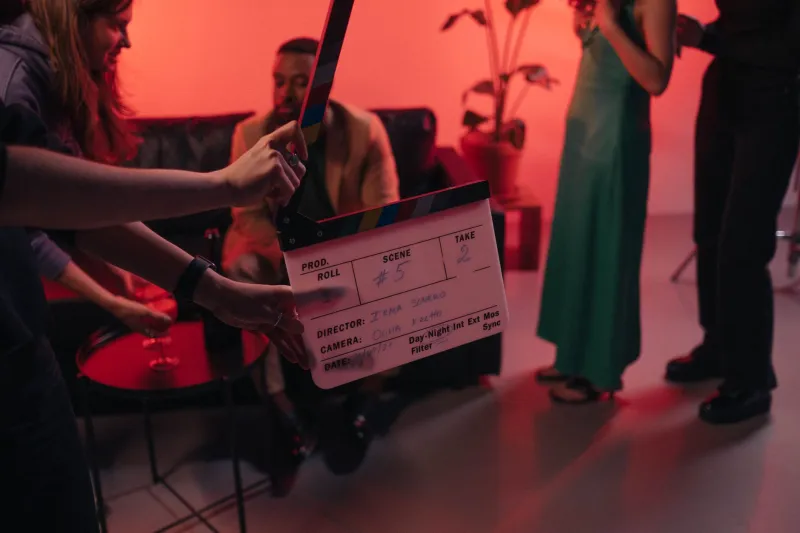
There's a scene in Arrival — you probably know the one — where the full emotional weight of the film crashes down on you in the final act. It works because Denis Villeneuve spent nearly two hours building the architecture of that feeling. Every quiet moment, every ambiguous exchange, every deliberately slow pan across a Montana sky was load-bearing.
Now imagine that scene as a 47-second TikTok clip with a trending audio track underneath it.
That's not a hypothetical anymore. It's Tuesday.
Studios have fully committed to reformatting their films — and in some cases, commissioning entirely new vertical edits — to feed the social platforms. The rationale makes total sense from a marketing spreadsheet: short-form video drives discovery, younger audiences live on TikTok, and algorithmic reach is essentially free advertising. Fine. But somewhere between the strategy meeting and the content calendar, a line got crossed. We stopped using clips to point people toward the movie. We started using clips to be the movie.
The Difference Between a Trailer and a Dissection
Trailers have always existed. Movie marketing has always involved showing you the good parts. Nobody's clutching pearls over a two-minute preview that hits the emotional highlights.
But what's happening now is categorically different. Studios and filmmakers are producing what are essentially alternate cuts — reformatted for 9:16 aspect ratios, stripped of ambient sound, captioned for muted autoplay, and algorithmically timed to peak engagement windows. Some of these aren't just clips pulled from the film. They're re-edited sequences that restructure the narrative order, front-load the payoff, and remove everything the director considered connective tissue.
That connective tissue? That's where cinema actually lives.
Pacing is not filler. The three-minute conversation scene that seems to go nowhere is doing something. The extended silence before a character makes a decision is doing something. The wide shot that holds just a beat too long — doing something. When you optimize a film for retention metrics, you're not just trimming fat. You're removing the nervous system.
When Viral Moments Become the Whole Story
Look at what happened with Everything Everywhere All at Once — a film that genuinely exploded on social media in the best possible way. Clips of the googly eyes, the hot dog fingers, the "I will always find you" moments went everywhere. And yes, those clips drove people to actually watch the movie. That's the success case. That's how it's supposed to work.
But notice what made that work: the clips were incomprehensible out of context. They were weird enough, specific enough, and emotionally unresolved enough that they functioned as an invitation rather than a substitute. You watched the clip and thought, what is happening and where do I sign up for more of this.
Contrast that with the trend of studios releasing what are essentially emotional highlight reels — the confession scene, the reunion, the big dramatic reveal — pre-packaged and self-contained. These clips don't make you want to see the movie. They give you the movie's most potent moment without the two hours of investment that made it potent in the first place. You get the hit without earning it. And somehow, that feels like a net loss for everyone involved, including the audience.
Directors Are Getting Pressured Into This
Here's the part that doesn't get talked about enough: this isn't always coming from cynical studio executives in suits. Some directors are being asked — or are choosing — to think about the social cut during production. Framing decisions, scene length, even dialogue is being shaped by what will play well in a vertical crop.
That's a genuinely alarming creative constraint. It's the equivalent of asking a novelist to write every chapter so that the third paragraph works as a standalone Instagram caption. You can technically do it. The result will be coherent. It will also be hollowed out in ways that are hard to articulate but impossible to ignore once you notice them.
When the 9:16 frame starts influencing the 1.85:1 frame, the whole visual grammar of cinema shifts. Compositions that require width — the kind of widescreen landscapes that make you feel the scale of a world — become liabilities. Slow burns become risks. Ambiguity becomes a problem to be solved rather than a texture to be sustained.
What Audiences Are Actually Losing
There's a version of this conversation that sounds elitist — like we're defending cinema from the unwashed masses who just want their dopamine hits. That's not the argument.
The argument is simpler: duration is meaning. The experience of sitting with something for two hours, of letting a story move at its own pace, of not knowing where it's going — that's not an inconvenience to be optimized away. That's the whole point.
When a film's emotional climax hits you after 90 minutes of earned investment, it hits differently than when it hits you at the 0:23 mark of an autoplay clip while you're waiting for your coffee. The neurological experience is not the same. The memory formed is not the same. The conversation you have afterward is not the same.
And if studios keep training audiences to expect the payoff without the journey, they're not just changing how films are consumed. They're changing what audiences will tolerate — and eventually, what filmmakers will bother to create.
So What Actually Works?
This isn't a call to keep cinema locked behind velvet ropes and make TikTok illegal. Short-form content and feature films can coexist. They've been coexisting. The question is whether one should be allowed to cannibalize the other.
The studios that are navigating this well are the ones treating social content as adjacent to the film rather than a compressed version of it. Behind-the-scenes footage, director commentary clips, cast moments that don't appear in the film itself — these build anticipation without giving away the experience. They're marketing. They're not substitutes.
The ones getting it wrong are treating the film's most affecting scenes like assets to be liquidated for engagement. And every time a clip of a movie's most devastating moment racks up three million views on TikTok before the film even opens wide, something small and hard to name gets lost.
Cinema has survived television, VHS, DVD, streaming, and a global pandemic. It'll probably survive TikTok too. But not by becoming it.