After the Credits: The Quiet Rewrites Happening to Movies and Shows You Already Watched
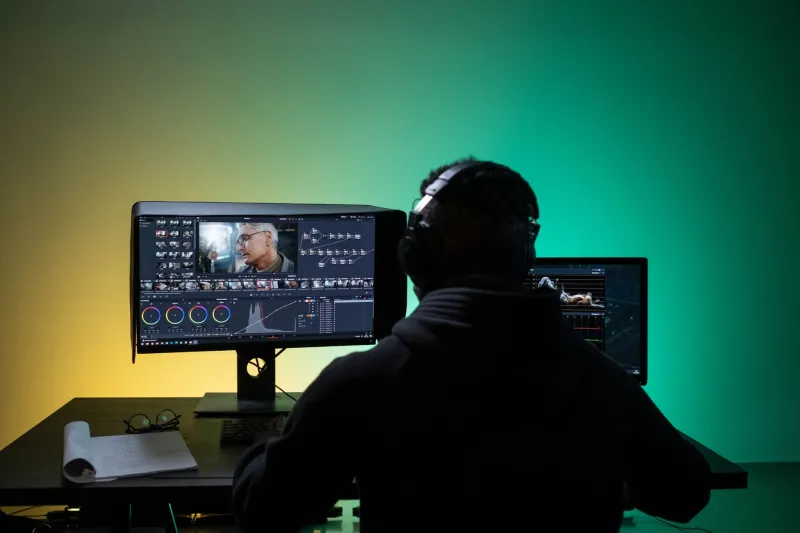
Here's a scenario worth sitting with for a second. You watch a movie on a streaming platform. You love it. You recommend it to a friend. They watch it two weeks later on the same platform, and when you two start talking about that scene — the one that really got you — they have no idea what you're talking about. Not because they weren't paying attention. Because the scene isn't there anymore.
This isn't a glitch. It's a policy. And it's happening more than most of us realize.
The Edit That Never Gets Announced
Streaming platforms have quietly built themselves into something that functions less like a movie theater and more like a living document. Unlike a theatrical release — where a print is a print and the film is fixed — a digital file can be updated, trimmed, or swapped out overnight. No press release. No note in the credits. No asterisk anywhere.
The practice started getting attention in international markets, where platforms would cut or alter content to comply with local regulations. A same-sex kiss removed for a Middle Eastern audience. A drug reference softened for a Southeast Asian market. Those changes, while genuinely worth scrutinizing, at least had a traceable logic: different country, different rules.
What's harder to track — and frankly more unsettling — is when the same thing happens domestically. When a scene disappears from the version available to American subscribers, not because of a foreign government's demands, but because of an internal content review, an advertiser conversation, a shifting cultural calculation, or just a quiet executive decision that never made it into any headline.
What "Content Moderation" Actually Means for Storytelling
The phrase "content moderation" tends to conjure images of social media — flagged posts, banned accounts, comment sections getting cleaned up. But streaming platforms are increasingly applying a similar logic to the films and shows they host, and the implications for narrative are genuinely different.
When a joke gets cut from a comedy special, it's not just a missing punchline. It's a shift in the comedian's voice, their risk tolerance, the relationship they're building with the audience. When a scene gets trimmed from a drama, the emotional arc can quietly collapse. Characters make decisions that no longer feel earned. Themes land softer than they were supposed to. The whole thing still works, technically — but it's working toward something slightly different than what the creator built.
Directors and writers have long fought for final cut, for the right to protect their vision from studio interference. But the conversation has almost always centered on what happens before release. The idea that a version of your film could be altered after it's already out in the world — after reviews ran, after awards were submitted, after audiences formed their opinions — represents a fundamentally new kind of creative vulnerability.
The Viewer Doesn't Know What They Don't Know
Maybe the most quietly troubling part of all this is the information gap. When a film gets re-rated or a show gets pulled entirely, there's usually some kind of paper trail — a news item, a Reddit thread, a tweet from an outraged fan. But when the edit is surgical and the change is subtle, there's often nothing to alert viewers that what they're watching isn't what was originally released.
Audiences trust that the version in front of them is the version. That's a reasonable assumption. We don't watch movies with a fact-checker running alongside, cross-referencing every scene against a master archive. We just watch. And that trust is being used — not maliciously, necessarily, but casually — in ways that are fundamentally changing the relationship between creator and viewer.
There's a word for when a company changes a product after you've already bought it without telling you: deceptive. We'd call it that in almost any other consumer context. With entertainment, we've largely just... accepted it.
The Creator's Side of This
Talk to enough people who work in film and television and you'll hear a version of the same frustration. The theatrical window used to mean something — it was a protected space where the work existed as intended, at least for a while. Streaming collapsed that window, which was great for accessibility and convenience. But it also handed platforms an ongoing editorial relationship with content that was never part of the original deal.
Some creators have pushed back publicly. Others have quietly negotiated contractual language to try to protect their work. But the power imbalance is significant. When a streaming platform is also your primary distributor, your financier, and your marketing machine, fighting over a post-release edit is a battle most people can't afford to pick.
And the audience rarely even knows there's a fight happening.
What Would Transparency Actually Look Like?
It's worth asking what a more honest version of this system could look like, because "just don't change anything" isn't a realistic ask in an industry that's constantly navigating legal, cultural, and commercial pressures.
The baseline, though, should probably be disclosure. If a version of a film or show available on a platform differs meaningfully from the original release — for any reason — viewers deserve to know that. A simple notation. A version number. Something. The way physical media used to clearly label "theatrical cut" versus "director's cut" gave audiences agency. They could choose. They could understand what they were watching and why.
Streaming has stripped that transparency away in exchange for frictionless convenience. And convenience is great, genuinely — but not when it comes at the cost of knowing whether the story you just watched is actually the story someone meant to tell.
Why This Matters Beyond the Cinephile Conversation
It's easy to frame this as a concern for film nerds and purists — the kind of people who care about aspect ratios and director's commentaries. But this is really a conversation about something bigger: who gets to decide what stories mean, and at what point does curation become control?
Entertainment isn't just entertainment. The films and shows we watch shape how we understand the world, process difficult experiences, and recognize ourselves in other people's stories. When those stories get quietly adjusted — when the edges get sanded down, the challenging moments softened, the uncomfortable truths trimmed — we lose something that's genuinely hard to quantify but very real.
The version of the movie you watched might not be the movie that was made. And right now, you'd have almost no way of knowing.